The Department of Law
PhD defence by Lærke Bjørka Fosgaard: The transfer of rights in a digitalised age
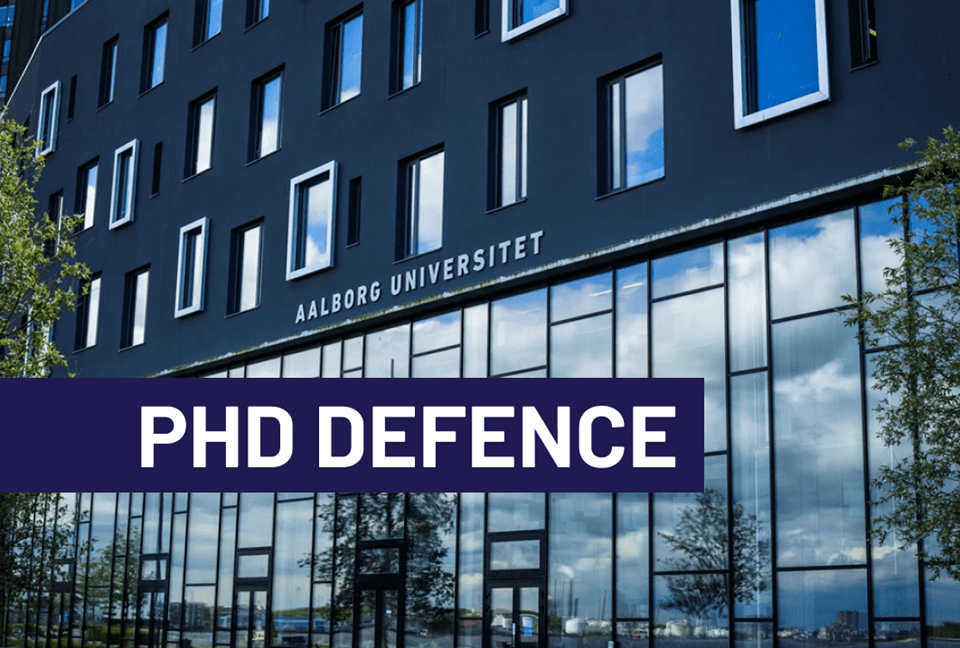
Auditorium C, Fibigerstræde 15, 9220 Aalborg Ø followed by a reception at Fibigerstræde 4, 9220 Aalborg Ø.
04.05.2023 Kl. 13:00 - 16:30
Tilmeldingsfrist: 29.04.2023

English

On location
Auditorium C, Fibigerstræde 15, 9220 Aalborg Ø followed by a reception at Fibigerstræde 4, 9220 Aalborg Ø.
04.05.2023 Kl. 13:00 - 16:30
Tilmeldingsfrist: 29.04.2023
English
On location
The Department of Law
PhD defence by Lærke Bjørka Fosgaard: The transfer of rights in a digitalised age
Auditorium C, Fibigerstræde 15, 9220 Aalborg Ø followed by a reception at Fibigerstræde 4, 9220 Aalborg Ø.
04.05.2023 Kl. 13:00 - 16:30
Tilmeldingsfrist: 29.04.2023
English
On location
Auditorium C, Fibigerstræde 15, 9220 Aalborg Ø followed by a reception at Fibigerstræde 4, 9220 Aalborg Ø.
04.05.2023 Kl. 13:00 - 16:30
Tilmeldingsfrist: 29.04.2023
English
On location
PROGRAM
13:00: Ph.d. defence: The Transfer of Rights in a Digitalised Age
THEME OF THE LECTURE: The Concept of Soft Law and the Different Ways to Use Soft Law to Enable a Transfer of Rights in a Digitalised Age.
Followed by reception.
Abstract
The scope of this study is to explore the purposes and means of the UNCITRAL Model Law on Electronic Transferable Records (MLETR) and to contextualize its interplay with other legal regimes. The MLETR provides for the requirements an electronic transferable record must fulfil in order to be deemed the functional equivalent to a transferable document. A technical examination of the MLETR is required with the aim to both achieve an understanding of the MLETR as an enabler of the use of electronic transferable records and furthermore to assess the interplay of the MLETR with other legislative instruments.
One of the reasons as to why work on the MLETR was initiated in 2011, was the wish for an instrument to act as a support to the implementation of the United Nations Convention on Contracts for the International Carriage of Goods Wholly or Partly by Sea (the Rotterdam Rules) adopted by UNCITRAL in 2008. It is demonstrated that the MLETR supplements the Rotterdam Rules on certain aspects of the use of electronic transport records. The study investigates how the issue of electronically replicating the functions of a transferable record is solved under current national law with the bill of lading acting as a case study. This requires first studying the peculiarities of the document if issued in paper. Denmark, Norway, and Sweden have been chosen as being subject to study as primarily one entity as their legislation in the legal field to a very large extend is similar. Where the laws significantly differ, this has been pointed out. The results from the study on the legislation facilitating the use of bills of lading in paper allows for assessing whether the current legislation facilitates the use of electronic bills of lading. It is demonstrated that the issue of possession is essential in order for the bill of lading to function as the key to the cargo. Seeing as the concept of possession plays a key role in Denmark, Norway, and Sweden, the study turns to investigating the concept of possession in England and Wales. Just as the case is in Denmark, Norway, and Sweden, possession of the bill of lading plays a key role in order for the bill to function as the key to the cargo and being a document of title. The study turns to investigating whether the current legislation caters for the use of electronic bills of lading. It is concluded that in Denmark, Norway, and Sweden it is uncertain whether the legislation facilitates the use of electronic bills of lading. It is concluded with certainty that the current legislation in England and Wales does not cater for the use of electronic bills of lading as such documents cannot be possessed in electronic form.
On these grounds, the study provides a look into the future of the use of electronic transferable records. The Rotterdam Rules adopted by UNCITRAL in 2008 contain provisions for the use of electronic transport records. The MLETR was adopted by UNCITRAL in 2017. In Sweden, the Supreme Court decided in 2017 that negotiable documents should be able to function in an electronic environment. In 2020 the International Chamber of Commerce urged Governments to implement legislation on electronic trade documents as a response to challenges arising from the Covid-19-pandemic. At the G7 summit in England in 2021 it was suggested that jurisdictions adopt legislation on electronic transferable records and accordingly England and Wales have initiated a law reform in the field of electronic trade documents. It is concluded that we stand in the midst of a shift of paradigm, allowing documents which functions depend on their ability to being physically possessed to function solely in an electronic environment.
Attendees
- Associate professor Sandra Cassotta, Aalborg University (chair)
- Associate professor Katerina Mitkidis, Aarhus University
- Justice Johnny Herre, Supreme Court of Sweden
- Associate Professor Thomas Neumann